
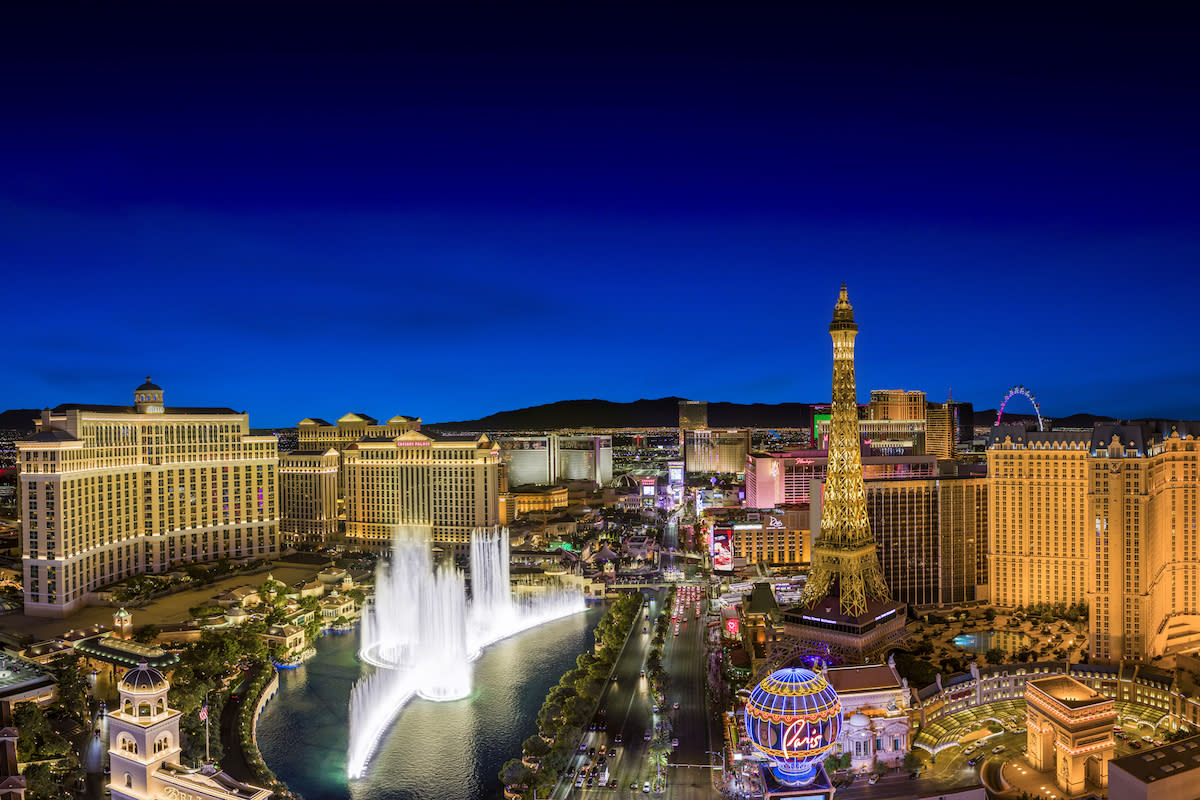
The Las Vegas Strip functions as the central corridor for a significant portion of the region's trade show and convention activity. Its dense concentration of resort properties with integrated meeting facilities creates distinct operational considerations for exhibitors. Planning resources focused on this area emphasize alignment with the specific demands of events held in these environments, where business objectives intersect with the unique character of the Strip.
Effective trade show display rental coordination for the Las Vegas Strip prioritizes understanding venue specifications across resort-based spaces and their relationship to primary convention anchors. The area benefits from its position within the broader Las Vegas market, which supports a wide service footprint encompassing the convention corridor and adjacent districts including Paradise, Winchester, Spring Valley, and Enterprise.
This planning guide draws from established demand drivers to help exhibitors develop coordinated approaches that optimize presence along the Strip while maintaining operational efficiency across the full spectrum of recommended locations in the Las Vegas region.
Execution priorities
- Integration with resort-based convention facilities along the corridor
- Alignment with primary venues including the Las Vegas Convention Center and Venetian Expo
- Differentiation between Strip South, Central, and North segments
- Coordination with nearby districts such as Paradise and Spring Valley
- Scalable approaches for varying event scales and attendee profiles
- Strategic positioning relative to the convention corridor ecosystem
- Focus on measurable outcomes within the broader Las Vegas market
The Strategic Role of the Las Vegas Strip in Regional Trade Show Activity
The Las Vegas Strip serves as a primary hub within the larger Las Vegas market, supporting extensive convention activity through its network of resort properties and proximity to major exhibition facilities. This corridor enables exhibitors to access a consistent flow of national and international events that leverage the area's established infrastructure for business gatherings. Planning resources for the Strip focus on its capacity to host diverse event types while connecting to the wider service area that includes the convention corridor, Henderson, Summerlin, and satellite communities.
Demand for coordinated display solutions along the Strip stems from the continuous schedule of exhibitions that utilize both dedicated convention spaces and resort ballrooms. The area's ability to accommodate multiple concurrent events requires precise planning to ensure exhibits align with specific venue requirements and overall market dynamics. Resources for this location emphasize understanding these patterns as part of a comprehensive approach to exhibition management in the Las Vegas region.
The Strip's position allows for strategic connections to recommended locations including the Convention Center District, Paradise, Winchester, Spring Valley, Enterprise, and Summerlin. This interconnected market structure supports exhibitors seeking to maximize reach across the full range of venues and districts that characterize the Las Vegas trade show landscape.
Primary Venues Supporting Trade Shows on the Las Vegas Strip
Several major facilities drive convention demand that directly benefits the Las Vegas Strip. The Las Vegas Convention Center functions as a foundational venue with its expansive capabilities, positioned to serve events that draw participants to Strip accommodations. The Venetian Expo provides additional specialized exhibition space integrated with resort operations at one of the Strip's landmark properties.
Additional key facilities include the Mandalay Bay Convention Center, which anchors the south portion of the corridor with its resort-integrated exhibition capabilities. Caesars Forum Conference Center delivers modern conference and display environments in the central Strip area. Fontainebleau Las Vegas has expanded the north Strip's capacity with contemporary meeting and exhibition infrastructure.
Supporting venues such as Westgate Las Vegas Resort & Casino, Alexis Park All Suite Resort, and Virgin Hotels Las Vegas contribute to the overall inventory of spaces that exhibitors utilize along or adjacent to the Strip. Further demand drivers in nearby areas include Green Valley Ranch Resort & Spa and Hilton Lake Las Vegas Resort & Spa, which extend the market's service radius while maintaining connections to core Strip activity.
Coordination resources for the Las Vegas Strip emphasize understanding the distinct characteristics of each of these venues to develop display approaches that perform effectively within their specific operational frameworks.
- Las Vegas Convention Center as primary anchor for the convention corridor
- Venetian Expo for integrated resort exhibitions
- Mandalay Bay Convention Center at the south end of the Strip
- Caesars Forum Conference Center in the central corridor
- Fontainebleau Las Vegas expanding north Strip capacity
- Westgate Las Vegas Resort & Casino and supporting properties
Coordinated Display Rental Strategies for Strip Events
Developing a rental strategy for the Las Vegas Strip involves aligning display selections with the spatial and operational realities of resort-based venues and major convention facilities. Resources for this market stress the importance of flexible configurations that can adapt to varying ballroom dimensions and exhibition hall layouts common along the corridor. The planning process prioritizes solutions that support efficient installation within the tight schedules typical of the region's event calendar.
Exhibitors benefit from approaches that consider the full spectrum of recommended locations, allowing for consistent branding whether an event is based directly on the Strip or extends into adjacent districts like Summerlin South, Enterprise, or the Arts District. Coordination emphasizes scalability, enabling adjustments based on specific event objectives and anticipated attendance drawn to the Las Vegas market.
Effective strategies also account for the relationships between the Strip and the broader service area, including Henderson, North Las Vegas, and Centennial Hills. This comprehensive view supports unified planning that maintains brand integrity across multiple potential venues within the Las Vegas ecosystem.
Timeline Management for Las Vegas Strip Exhibitions
Successful execution along the Las Vegas Strip requires detailed timeline coordination that accounts for the high density of events utilizing the same properties and facilities. Planning resources highlight the need for precise scheduling of display delivery, setup, and removal to align with the operational demands of venues such as the Venetian Expo, Mandalay Bay Convention Center, and Caesars Forum.
The interconnected nature of the Strip with the convention corridor and nearby districts like Paradise and Winchester means exhibitors often navigate overlapping event schedules. Authoritative coordination guides stress the development of contingency approaches that maintain flexibility while ensuring compliance with individual venue protocols and the overall market's pace.
From initial concept through final dismantle, effective timeline management considers the full event lifecycle within the context of the Las Vegas market's year-round activity. This includes alignment with facilities in Summerlin, Green Valley, and other recommended locations that may serve as extensions or alternatives to primary Strip-based events.
- Alignment with venue-specific installation windows
- Coordination across the convention corridor calendar
- Flexibility for adjacent district opportunities
- Integration with broader Las Vegas event schedules
Budget Planning and Resource Allocation for the Strip Market
Resource allocation for trade show displays on the Las Vegas Strip benefits from structured planning that balances impact with efficiency across the market's diverse venue options. Coordination resources provide frameworks for evaluating rental investments against the opportunities presented by major facilities including the Las Vegas Convention Center, Fontainebleau Las Vegas, and supporting resorts.
The Strip's position within the larger ecosystem that encompasses Spring Valley, Enterprise, Summerlin, and Henderson allows for strategic budgeting that can extend across multiple districts. This approach helps exhibitors optimize expenditures while maintaining presence in the primary demand areas that define the Las Vegas trade show landscape.
Effective budget planning incorporates considerations for the full range of recommended locations, enabling scalable solutions that adjust to different event tiers. From intimate gatherings at properties like Virgin Hotels Las Vegas to large-scale exhibitions at the Venetian Expo, coordinated resources help align financial planning with specific market realities.
Extending Strategy from the Strip to Adjacent Las Vegas Districts
The Las Vegas Strip functions as a central reference point for a service area that extends to numerous recommended districts and communities. Planning for display rental often incorporates strategies that maintain consistency when events shift between the Strip and locations such as Downtown Las Vegas, the Arts District, Summerlin Meeting District, or the Henderson Lake Las Vegas Corridor.
This integrated market view supports exhibitors in developing approaches that leverage the Strip's high visibility while incorporating the distinct characteristics of areas like Southwest Las Vegas, West of Strip, East of Strip, and North Las Vegas. Coordination resources emphasize the connections between these zones to create cohesive exhibition programs.
By understanding the relationships between the Strip and surrounding territories including Boulder City, Primm, Jean, and Inspirada, exhibitors can build comprehensive strategies that capitalize on the full depth of the Las Vegas market. This district-level differentiation enables more nuanced planning that responds to the specific attributes of each area while maintaining operational coherence.
Establishing Measurable Outcomes for Strip-Based Initiatives
Planning resources for the Las Vegas Strip emphasize the development of clear metrics that align with the objectives of events hosted at primary venues and supporting facilities. The concentration of activity along the corridor provides opportunities to evaluate performance against the market's established demand drivers and the specific characteristics of resort-integrated exhibitions.
Effective measurement frameworks consider the broader context of the Las Vegas region, incorporating insights from activity in Paradise, Winchester, Spring Valley, Enterprise, and Summerlin. This comprehensive approach allows exhibitors to assess results not only from Strip events but also from their extension into adjacent recommended locations.
Coordination guides support the creation of evaluation methods that account for the unique environment of the Strip while providing actionable data for future planning across the full spectrum of venues listed among the market's primary demand drivers.
- Metrics aligned with major convention facility outcomes
- Evaluation across Strip segments and adjacent districts
- Integration with overall Las Vegas market performance
- Data-driven refinement of rental coordination strategies
Frequently Asked Questions About Las Vegas Strip Trade Show Display Planning
What makes the Las Vegas Strip distinct for trade show display coordination?
The Las Vegas Strip features a dense concentration of resort-based convention facilities integrated with the broader convention corridor. Its position supports connections to multiple districts including Paradise, Spring Valley, Enterprise, and Summerlin while serving as the reference point for events at major venues such as the Las Vegas Convention Center, Venetian Expo, Mandalay Bay Convention Center, and Caesars Forum.
Which primary venues drive demand for the Las Vegas Strip market?
Key facilities include the Las Vegas Convention Center, Venetian Expo, Mandalay Bay Convention Center, Caesars Forum Conference Center, Fontainebleau Las Vegas, Westgate Las Vegas Resort & Casino, Alexis Park All Suite Resort, Virgin Hotels Las Vegas, Green Valley Ranch Resort & Spa, and Hilton Lake Las Vegas Resort & Spa. These demand drivers support the planning of coordinated display rentals across the Strip and adjacent areas.
How should exhibitors approach timeline coordination for Strip events?
Timeline coordination for the Las Vegas Strip requires alignment with the operational schedules of resort venues and major convention facilities. Resources emphasize building flexibility into plans to accommodate the high volume of activity across the convention corridor and recommended locations including the Convention Center District, Summerlin, and Henderson.
Can display strategies developed for the Strip extend to other Las Vegas districts?
Yes. The Las Vegas market supports a wide service-area approach designed around the Strip that encompasses recommended locations such as Downtown Las Vegas, the Arts District, Summerlin Meeting District, Southwest Las Vegas, North Las Vegas, and the Henderson Lake Las Vegas Corridor. Coordinated planning maintains consistency across these interconnected areas.
What factors influence budget planning for Las Vegas Strip exhibitions?
Budget planning incorporates the specific requirements of venues along the Strip and their relationship to the broader market. Resources focus on scalable rental approaches that balance investment with opportunities presented by facilities including the Venetian Expo, Mandalay Bay Convention Center, Fontainebleau Las Vegas, and supporting properties throughout the region.
How does district-level differentiation affect planning for the Las Vegas Strip?
District-level differentiation recognizes the distinct operational characteristics of Strip South, Strip Central, and Strip North segments alongside nearby areas such as Paradise, Winchester, Enterprise, Summerlin South, and West of Strip. This nuanced understanding supports more precise coordination of display rentals within the overall Las Vegas market structure.