
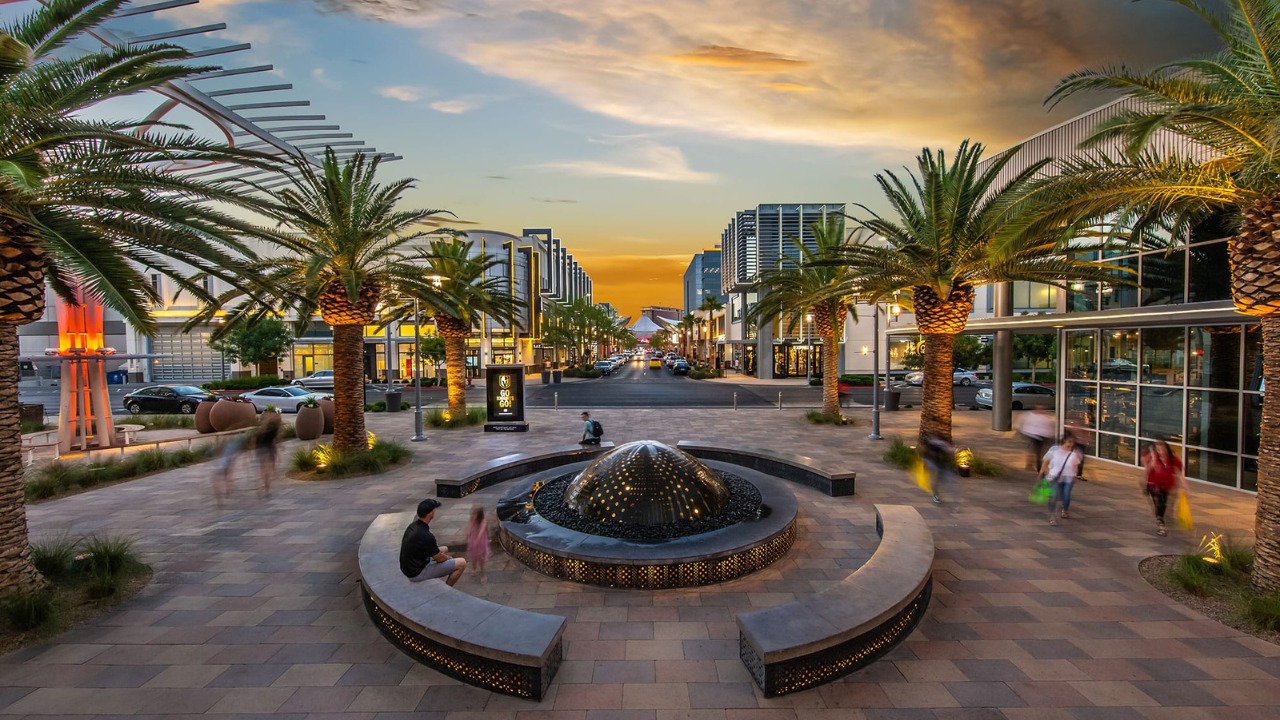
Summerlin NV functions as a secondary priority location within the Las Vegas trade show market, contributing to a wide service-area footprint that encompasses the Strip, convention corridor, Henderson, and adjacent satellite towns. This positioning supports comprehensive planning that connects district-specific efforts to the primary demand centers driving activity across the region. Coordination resources emphasize operational alignment, allowing exhibitors to extend their reach without concentrating solely on high-traffic core zones.
The broader Las Vegas ecosystem draws significant momentum from established venues that shape the annual calendar and influence strategies in secondary districts like Summerlin. Planning for displays in this area requires attention to how these demand drivers create opportunities for complementary events, targeted networking, and sustained presence throughout the market. District-level differentiation ensures that Summerlin initiatives reflect its distinct character while maintaining consistency with overarching exhibition standards.
Effective trade show coordination in Summerlin prioritizes nuance, timeline synchronization, and integration with the full range of recommended locations including Summerlin South, Summerlin West, and the Summerlin Meeting District. This approach delivers authoritative guidance focused exclusively on planning and resource optimization drawn from verified market characteristics.
Execution priorities
- Alignment with primary Las Vegas convention demand drivers and schedules
- District-level differentiation from the Strip and Convention Center District
- Integration across the extended service area including Summerlin South and West
- Operational timeline synchronization with regional event calendars
- Customization for the Summerlin Meeting District event profiles
- Connection to resort-based venues shaping secondary market activity
- Focus on measurable coordination for sustained market presence
Summerlin's Role in the Extended Las Vegas Service Area
The Las Vegas market rationale explicitly supports a broad service-area footprint designed around major corridors and including Summerlin NV as a recommended secondary location. This structure enables planning that treats Summerlin not as an isolated target but as an integrated component capable of supporting exhibitors who seek to engage audiences across varied districts. Recommended location lists consistently include Summerlin alongside Paradise, Winchester, Spring Valley, Enterprise, and multiple Summerlin variants, underscoring its strategic value for diversified campaigns.
Planning implications for this footprint emphasize the ability to coordinate displays that maintain effectiveness whether supporting activities near primary venues or in community-oriented settings like Summerlin. The secondary priority status does not diminish importance; rather, it highlights the need for precise operational detail to capitalize on the district's position west of the core convention zones. Such planning avoids over-reliance on any single area and instead builds resilient strategies that adapt to the full spectrum of Las Vegas opportunities.
By referencing the documented wide footprint, coordination efforts can synchronize Summerlin participation with larger market rhythms. This creates efficiencies in resource allocation and allows display plans to evolve based on the collective influence of surrounding locations including Downtown Las Vegas, the Arts District, and Henderson. The result is a more sophisticated understanding of how Summerlin contributes to overall exhibition success without requiring standalone infrastructure.
District differentiation becomes a central theme. Summerlin's inclusion signals its capacity to host or support events with distinct demographics and objectives compared to the intense scale of the Convention Center District or the entertainment-driven atmosphere of the Strip. Planning therefore incorporates these nuances to refine booth configurations, messaging, and engagement tactics accordingly.
- Secondary priority in documented location targets
- Part of explicitly stated wide service-area footprint
- Listed alongside Summerlin South, West, and Meeting District
- Supports diversified regional exhibition strategies
- Enables synchronization with primary demand centers
Primary Venues Shaping Demand Across the Las Vegas Region
Demand drivers for the Las Vegas trade show market are led by a series of prominent venues whose activities ripple throughout secondary districts including Summerlin. The Las Vegas Convention Center stands as a cornerstone with its expansive capacity for major industry events, while the Venetian Expo delivers sophisticated exhibition environments that set benchmarks for presentation quality. Mandalay Bay Convention Center, Caesars Forum Conference Center, and Fontainebleau Las Vegas further diversify the calendar with specialized conference and display capabilities.
Additional properties such as Westgate Las Vegas Resort & Casino, Alexis Park All Suite Resort, Virgin Hotels Las Vegas, Green Valley Ranch Resort & Spa, and Hilton Lake Las Vegas Resort & Spa expand the range of resort-integrated options that influence planning in areas like Summerlin. These venues generate consistent activity that planners can leverage when developing coordinated campaigns extending into secondary markets. Understanding their individual profiles allows for display strategies that complement rather than compete with the primary calendar.
Coordination from a Summerlin perspective involves mapping these demand centers to identify overlap and extension opportunities. For instance, events at the Venetian Expo or Caesars Forum often attract participants who may engage with follow-up activities or satellite programming in nearby districts. This interconnected view ensures that display planning remains responsive to actual market flows rather than theoretical assumptions.
The collective impact of these venues creates a robust environment where secondary locations gain relevance through strategic positioning. Planning resources therefore reference these established facts to inform decisions on scale, timing, and design elements best suited for Summerlin NV implementations.
District Differentiation and Operational Detail in Summerlin
Summerlin NV requires tailored planning that differentiates it from neighboring districts such as the Las Vegas Strip, Convention Center District, Paradise, and Enterprise. While the core corridors handle high-volume traffic and large-scale productions, Summerlin supports more focused, community-integrated events that benefit from refined display approaches emphasizing quality interactions over sheer volume. This nuance drives the need for operational details that address specific layout constraints, audience expectations, and environmental integration unique to the area.
The Summerlin Meeting District, listed among recommended targets, further illustrates the requirement for precision. Coordination here prioritizes adaptability to mid-sized gatherings that often serve corporate or specialized professional groups. Display planning must account for these characteristics by selecting modular solutions capable of adjustment across varying venue scales within the district while preserving brand coherence with larger Las Vegas efforts.
Operational detail extends to timeline management that aligns Summerlin activities with the schedules established at primary venues. By synchronizing preparation, execution, and follow-up phases, exhibitors avoid conflicts and maximize cumulative impact. This level of coordination transforms Summerlin from a peripheral consideration into a calculated element of regional strategy.
Attention to these distinctions prevents generic planning and instead fosters strategies that respect the documented hierarchy of locations. The result is more effective resource deployment and higher potential for meaningful outcomes in the Summerlin segment of the market.
- Refined approach versus high-volume core districts
- Adaptability for Summerlin Meeting District events
- Timeline alignment with primary venue calendars
- Emphasis on quality interactions and brand coherence
- Modular solutions responsive to district constraints
Coordinating Displays Within the Broader Las Vegas Footprint
Authoritative planning treats Summerlin as one node in an interconnected network of locations that together constitute the Las Vegas trade show market. Recommended location lists extend from the Strip North to Strip South, from East of Strip to West of Strip, and outward to Centennial Hills, Sunrise Manor, and Boulder City. This comprehensive view informs display coordination that maintains consistency while allowing for localized adjustments appropriate to each district including Summerlin.
Strategies often involve multi-district campaigns where a core presence at the Las Vegas Convention Center or Venetian Expo is supplemented by targeted activity in Summerlin. Planning resources provide frameworks for ensuring that display assets, messaging, and metrics remain aligned across these touchpoints. Such integration leverages the full service-area footprint to amplify reach without redundant investment.
The process includes careful evaluation of how transportation networks and event sequencing affect attendee movement between districts. While avoiding unverifiable claims, coordination emphasizes data-driven sequencing that respects the documented relationships between primary demand drivers and secondary markets like Summerlin.
Long-term success depends on this holistic perspective. Exhibitors who plan with the entire ecosystem in mind position themselves to capitalize on both the scale of major venues and the accessibility of districts such as Summerlin, Summerlin South, and the Henderson Lake Las Vegas Corridor.
Strategic Timeline and Resource Optimization for Summerlin
Timeline development represents a critical operational focus when coordinating for Summerlin NV. Planning begins with mapping against the established calendars of primary venues including Fontainebleau Las Vegas, Westgate Las Vegas Resort & Casino, and the various resort properties that anchor regional activity. This synchronization prevents scheduling conflicts and creates opportunities for sequential activation across the service area.
Resource optimization follows directly from this mapping. Display selections are evaluated not only for immediate Summerlin suitability but also for versatility across the recommended locations. Budget frameworks prioritize flexibility, allowing reallocation based on performance indicators from interconnected events. The secondary status of Summerlin encourages efficient rather than expansive commitments, guided by clear planning protocols.
Emphasis on measurable milestones ensures that coordination remains on track from initial concept through post-event analysis. For the Summerlin Meeting District, this may involve shorter lead times for targeted gatherings, while broader campaigns incorporate longer horizons to align with major conventions. The planning discipline applied here distinguishes professional execution from ad-hoc efforts.
These techniques draw upon the market's documented characteristics to deliver realistic, achievable pathways for exhibitors. The outcome is a streamlined process that respects the hierarchy of locations while extracting maximum value from participation in Summerlin.
- Mapping against primary venue calendars
- Versatile display solutions for multiple districts
- Flexible budget frameworks based on performance
- Measurable milestones from concept to analysis
- Efficient commitments appropriate to secondary status
Future-Oriented Planning for the Summerlin Market Segment
The evolving Las Vegas trade show landscape continues to validate the inclusion of secondary locations like Summerlin in comprehensive planning. As the market sustains its wide footprint, coordination resources must anticipate shifts in how districts interact with primary drivers such as the Las Vegas Convention Center and specialized resorts. Summerlin's role is expected to grow as exhibitors seek balanced strategies that combine scale with precision targeting.
Planning for this future incorporates ongoing reference to the listed demand drivers and recommended locations to maintain relevance. Trends toward hybrid formats, technology-enhanced engagement, and sustainability considerations can be integrated at the district level, with Summerlin offering environments well-suited to more intimate, high-impact activations that complement larger shows.
By maintaining a strictly planning-focused perspective, resources help exhibitors build adaptable frameworks capable of responding to new developments while remaining grounded in the established market structure. This includes regular evaluation of how Summerlin South, Summerlin West, and the Summerlin Meeting District contribute to overall objectives.
The authoritative approach ultimately equips organizations with the insights needed to navigate the full Las Vegas ecosystem successfully. Summerlin emerges as a calculated choice within that ecosystem, supported by detailed coordination rather than isolated tactics.
Integrating Measurement and Refinement in Summerlin Strategies
Successful coordination extends beyond initial setup to include structured measurement tailored to Summerlin's position in the Las Vegas market. Planning frameworks establish key performance indicators that reflect both district-specific outcomes and contributions to broader campaigns. This dual focus ensures that exhibitions in secondary locations demonstrate clear value within the wider service area.
Refinement processes draw on insights gathered from events at primary venues to adjust approaches for Summerlin. For example, attendee feedback from a major gathering at Caesars Forum or Virgin Hotels Las Vegas can inform subsequent programming or display modifications in the Summerlin Meeting District. This iterative method strengthens future performance without requiring separate infrastructure for each location.
Documentation of these cycles creates institutional knowledge that benefits repeated participation across the recommended locations. The emphasis remains on planning discipline, data integration, and strategic alignment with the documented demand drivers and venue influences that define the Las Vegas trade show environment.
- Dual-focus KPIs for district and regional impact
- Iterative refinement using primary venue insights
- Development of institutional knowledge base
- Alignment with established market demand drivers
Frequently Asked Questions About Summerlin Trade Show Planning
Why is Summerlin NV included in Las Vegas trade show location planning?
Summerlin is designated a secondary priority location within the documented wide service-area footprint that also includes the Strip, convention corridor, Henderson, and satellite towns. It enables diversified strategies that connect to primary demand drivers across the full market.
Which venues primarily drive trade show demand in the Las Vegas region?
Primary demand drivers include the Las Vegas Convention Center, the Venetian Expo, Mandalay Bay Convention Center, Caesars Forum Conference Center, Fontainebleau Las Vegas, Westgate Las Vegas Resort & Casino, Alexis Park All Suite Resort, Virgin Hotels Las Vegas, Green Valley Ranch Resort & Spa, and Hilton Lake Las Vegas Resort & Spa.
How does planning for Summerlin differ from the Las Vegas Strip or Convention Center District?
Summerlin planning emphasizes district-level differentiation, focusing on refined, targeted engagements suited to its community-oriented character rather than the high-volume, entertainment-focused approaches typical of the Strip or the massive scale of the Convention Center District.
What is the Summerlin Meeting District and how does it fit into broader strategies?
The Summerlin Meeting District appears among recommended locations and supports mid-sized, specialized events. Planning integrates it with the overall service area, aligning timelines and display approaches with primary venues while addressing its distinct operational requirements.
How should exhibitors coordinate displays across multiple Las Vegas districts?
Coordination uses the full list of recommended locations to develop integrated campaigns that maintain brand consistency while adapting to each district. Timelines are synchronized with primary venue schedules to maximize efficiency and impact throughout the service-area footprint.
What type of planning resource is appropriate for Summerlin NV events?
Authoritative planning and coordination resources focused on strategic alignment, operational details, and market-wide integration provide the necessary frameworks without implying direct local execution, warehousing, or venue-specific relationships.